How to Start a NEMT Business Step by Step (2026)
How to Start a NEMT Business Step by Step (2026)
By Coach Willena McGee, RN-BSN · AAA-Accredited NEMT Training Provider
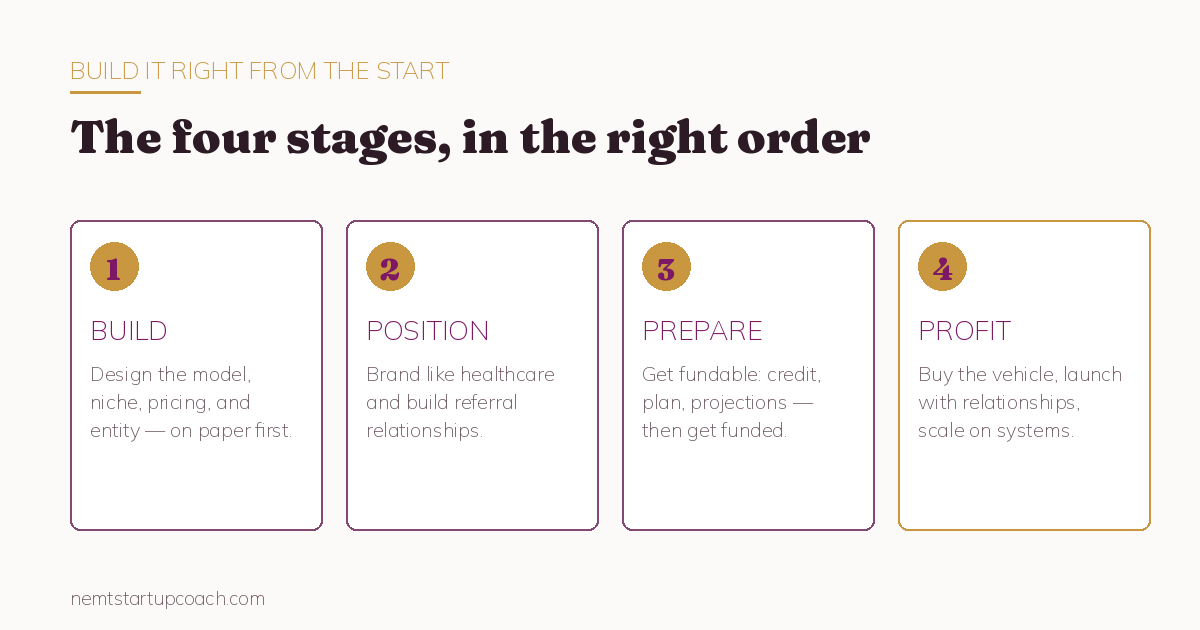
Starting a non-emergency medical transportation (NEMT) business takes roughly $120,000 — about $20,000 of your own cash plus about $100,000 in funding — and four stages done in the right order: build your model, position your brand, prepare your funding, then launch and profit. The biggest mistake new owners make is buying the vehicle first. The vehicle comes last.
I'm a registered nurse who lost my first medical transportation company to bankruptcy — and the order I did things in was a big part of why. Today I coach healthcare professionals to launch premium, self-pay NEMT companies the right way as an AAA-accredited training provider (TP24831). This is the step-by-step path I teach, at a high level, so you can see the whole road before you take the first step.
Step 1: BUILD — design the business before you buy anything
Most people start with the van. That's backwards — and it's the single most common reason new NEMT companies run out of money.
Before you spend a dollar on a vehicle, you need to build the business on paper:
Choose your model. I teach a premium, self-pay model — private clients and facilities who pay you directly at rates you set. This is a different category from Medicaid broker work, where the broker controls your rates and your volume.
Define your niche and service area. Who exactly do you serve — dialysis patients, seniors in assisted living, hospital discharges? Where? Specific beats general.
Price for profit. Your rates have to cover the trip, the vehicle, insurance, your driver, and still leave margin. Pricing is a math problem, not a guess.
Form the entity properly. LLC (or the structure your advisors recommend), EIN, business banking — clean from day one.
Step 2: POSITION — become the obvious premium choice
Premium clients and facilities don't hire the cheapest ride. They hire the company that looks and operates like a healthcare service.
Brand like a healthcare company, not a rideshare. Professional name, logo, website, and materials that a discharge planner would trust.
Build relationships before launch. Facilities, case managers, senior communities — the people who refer riders. Networking is the demand engine of self-pay NEMT.
Show your standards. Trained drivers, clean ADA-compliant equipment, clear service agreements. In healthcare transportation, trust is the product.
Step 3: PREPARE — get fundable, then get funded
Here's the honest money conversation most programs skip.
What it really costs: roughly $120,000 to launch properly — about $20,000 of your own cash (owner equity) and about $100,000 in funding covering an ADA-converted vehicle ($65,000) working capital reserve ($44,600), technology, launch marketing, and licensing. I break the full budget down in How Much Does It Really Cost to Start a NEMT Business?
What lenders look for: for a startup, SBA and commercial lenders look at your personal credit — generally 680+ with no late payments in the last 12 months — plus a bank-ready business plan, financial projections, and your owner equity. Then they decide what they'll fund. The part they resist most isn't the vehicle — it's the working capital that keeps you operating while your trip volume ramps up. Getting funded for both is what my method is built around. The full lending picture is in How to Get Funding for a NEMT Business.
Licensing and compliance: register your business, secure the local and state permits your area requires, and line up commercial auto insurance. Requirements vary by state — verify locally before you launch.
Step 4: PROFIT — buy the vehicle, launch, and scale
Only now — with the model built, the brand positioned, and the funding secured — do you buy the van.
Acquire the right vehicle: for wheelchair transport that's an ADA-converted van, and it's typically your largest single purchase.
Launch with your relationships, not just ads. The facilities and referral partners you built in Step 2 become your first booked trips.
Operate on systems: scheduling, intake, trip logs, invoicing — so quality holds as volume grows.
Scale deliberately: second vehicle, first hires, expanded service area — funded by revenue and planned like Step 1, not improvised.
Why the order matters
Every step funds and de-risks the next. The model tells you what to charge. The positioning creates the demand. The preparation gets you the capital. The vehicle only earns money when all three are already in place. Do it in reverse — van first, business later — and you end up with a payment and no runway. I know, because that's the mistake that cost me my first company.
FAQ
How much does it cost to start a NEMT business? Plan on roughly $120,000 all-in: about $20,000 of your own cash and about $100,000 in funding, covering the ADA vehicle, working capital, technology, marketing, and licensing.
How long does it take to start a NEMT business? Done in the right order, most founders should expect several months from decision to first paid trip — the build, positioning, and funding stages take longer than buying the vehicle itself.
Do I need a medical background to start a NEMT business? No. Healthcare experience helps with credibility and standards, but the business is open to anyone willing to build it professionally.
Do I need a CDL to drive for my NEMT business? Usually not for standard NEMT vehicles, but driver and vehicle requirements vary by state and vehicle capacity — verify your local rules.
Is NEMT a profitable business? It can be — especially the premium self-pay model, where you set your rates. Profitability depends on pricing, utilization, and controlling costs, which is why the model comes before the vehicle.
Ready to see the full path in one place? My free Healthcare Transportation Startup Brief walks you through the premium self-pay model and the right build order — before you buy the vehicle. Get the free brief here.
Coach Willena McGee, RN-BSN, is an AAA-accredited NEMT training provider (TP24831) who lost her first medical transportation company to bankruptcy and now coaches healthcare professionals to launch premium, self-pay NEMT companies the right way.


